
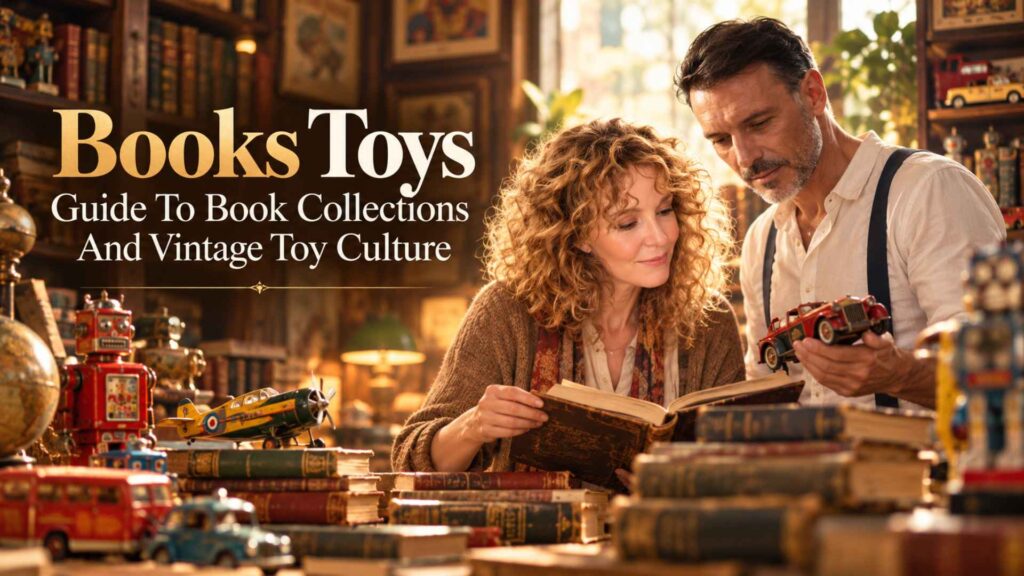
Books Toys Guide To Book Collections And Vintage Toy Culture
Books and vintage toys represent different forms of cultural history, reflecting changes in design, manufacturing, entertainment, and personal interests across generations. Printed books preserve ideas, artistic traditions, and the development of publishing, while collectible toys reveal how materials and manufacturing techniques have evolved. Both categories attract collectors who appreciate craftsmanship, historical context, and the stories associated with individual objects. A carefully maintained collection can provide valuable information about design trends, production methods, and popular culture during a particular period. Examining these objects involves more than identifying their age or estimating their market value. Books Toys presents information about collecting traditions, vintage objects, printed materials, and the preservation of physical collections.
Collecting books and vintage memorabilia combines personal interests with research, organization, and knowledge of material history. Some collectors focus on literary editions, illustrated publications, and historical printing methods, while others concentrate on model figures, mechanical toys, or promotional memorabilia. These interests may overlap when books and collectible objects share connections to artistic movements, entertainment franchises, or historical periods. Understanding the background of an item often requires examining its materials, manufacturer, publication details, and documented origin. Condition and completeness can also influence how collectors interpret and evaluate physical objects. A thoughtful collecting approach emphasizes reliable information, appropriate preservation, and an appreciation of the cultural significance of ordinary manufactured goods.
Contents
The Cultural Significance of Books and Collectible Objects
Books have served as important tools for recording and distributing knowledge for centuries. The development of mechanical printing in Europe during the fifteenth century contributed to substantial changes in the production and circulation of written material. Over time, publishers introduced new formats, illustration techniques, binding methods, and distribution systems to serve changing reading habits. Physical books can therefore provide evidence of both intellectual history and technological development. Features such as typography, paper quality, cover design, and binding construction help identify the circumstances in which a publication was produced. Book collecting often involves examining these details alongside the literary or informational content of the work itself.
Vintage toys and memorabilia can also reveal significant information about consumer culture and industrial design. Mechanical toys, miniature vehicles, model figures, and promotional objects reflect the manufacturing capabilities and popular interests of their respective periods. Earlier objects frequently employed materials such as wood, painted metal, and composition materials, while plastics became increasingly important during the twentieth century. Changes in materials affected manufacturing costs, production possibilities, surface decoration, and product design. Packaging and advertising provide additional evidence about how manufacturers presented their products to consumers. Studying these objects as historical artifacts allows collectors to consider the relationship between technology, visual culture, and everyday life.
Book Collecting and the History of Printed Editions
Book collecting includes a wide range of interests, from literary classics and illustrated volumes to specialized reference works and historical publications. Collectors often distinguish between editions, printings, and individual copies because these terms describe different aspects of a book’s publication history. A first edition generally refers to a particular edition’s initial publication, although publishers and bibliographers may apply more specific conventions when identifying individual printings. Physical evidence such as copyright pages, printer’s keys, binding variations, and publisher information can assist with identification. Dust jackets, original illustrations, inscriptions, and documented ownership may also contribute to the historical interest of a particular copy. However, age alone does not establish rarity, and rarity does not automatically guarantee strong market demand. Evaluating collectible books therefore requires attention to bibliographic details, condition, authenticity, and the availability of comparable copies.
Vintage Toys and the Evolution of Product Design
Vintage toys provide a practical record of developments in manufacturing, materials, and industrial aesthetics. Tinplate vehicles, wind-up mechanisms, cast-metal models, and molded plastic figures represent different stages in the development of mass-produced objects. Manufacturing techniques such as metal stamping, die casting, and injection molding enabled producers to create increasingly varied forms and components. These processes influenced not only the appearance of finished products but also their durability and production costs. Designers used color, proportion, movement, and recognizable shapes to communicate the identity and purpose of an object. Certain collectible toys also reflect broader developments in transportation, architecture, mechanical engineering, and popular entertainment. Examining their construction and design can reveal historical information beyond their original recreational function.
Condition, Authenticity, and Original Components
Condition is an important consideration when researching collectible books, vintage toys, and memorabilia. For printed material, common concerns include missing pages, damaged bindings, staining, fading, and previous repairs. Vintage manufactured objects may show paint loss, corrosion, cracks, replacement parts, or modifications made after production. These characteristics should be documented accurately because they can affect historical interpretation and collector interest. Authenticity involves determining whether an object corresponds to its claimed origin, manufacturer, or production period. Identifying genuine examples may require comparisons with reliable catalogs, documented specimens, manufacturing marks, and specialist research. Original components and associated packaging can provide useful evidence, but their presence does not independently prove that an object is authentic.
Materials and Long-Term Collection Preservation
Physical collections are affected by their surrounding environment and the properties of the materials from which they are made. Paper can become brittle or discolored through chemical deterioration, while prolonged light exposure may cause inks, dyes, and colored surfaces to fade. Metal components can corrode under unsuitable environmental conditions, particularly when exposed to moisture and reactive substances. Some historical plastics are chemically unstable and may develop discoloration, surface changes, or other forms of deterioration over time. Preventive conservation therefore emphasizes stable environmental conditions, careful handling, suitable storage materials, and protection from unnecessary light exposure. Different materials may require different precautions, especially when a single object combines paper, metal, plastic, adhesives, and painted surfaces. Avoiding aggressive cleaning or unnecessary restoration can help preserve original physical evidence that may be important to future researchers and collectors.
Cataloging and Documenting Personal Collections
Cataloging provides a systematic method for recording information about individual items and the relationships between them. A basic collection record may include an object’s title or name, manufacturer or publisher, approximate production date, material, dimensions, and identifiable markings. Additional notes can describe condition, associated accessories, previous repairs, and supporting documentation. Photographs of important features, such as printing details, labels, and manufacturing marks, can assist with later identification. Consistent records are particularly useful when collections contain multiple editions, production variations, or visually similar objects. Digital spreadsheets and collection databases can help organize information, although important records should also be backed up securely. Maintaining accurate documentation can improve research efficiency and preserve knowledge about a collection even when individual objects change ownership.
Responsible Collecting and Historical Research
Responsible collecting begins with understanding the difference between personal interest, historical significance, and financial speculation. An object may be culturally informative without being rare, and a high asking price does not necessarily represent its actual market value. Collectors can compare documented examples, evaluate the reliability of descriptive claims, and distinguish verified production details from assumptions. Provenance, meaning the documented history of an object’s ownership or origin, can provide valuable context when reliable evidence is available. At the same time, incomplete provenance does not automatically make an object inauthentic, particularly when historical records were not consistently maintained. Ethical research also involves respecting intellectual property, cultural heritage considerations, and applicable laws governing the trade or ownership of certain objects. Careful evaluation encourages a more accurate understanding of material culture and reduces dependence on unsupported collecting myths.
Books, toys, and memorabilia connect material objects with the broader development of publishing, technology, visual communication, and consumer society. Their significance is not limited to monetary value or the reputation of a particular manufacturer. Historical interest can be found in ordinary editions, familiar products, production variations, and examples of everyday design. Preserving these objects requires knowledge of their materials, an awareness of environmental risks, and documentation of their distinguishing characteristics. Books Toys approaches collecting as a subject that combines cultural appreciation with practical research and preservation knowledge. This perspective encourages readers to examine objects critically while recognizing the wider historical stories represented by physical collections.
What makes a book or vintage toy collectible?
Collector interest may depend on historical significance, condition, originality, scarcity, design, documented provenance, and demand.
Does an older collectible always have greater value?
No. Age alone does not determine value; condition, authenticity, rarity, completeness, and market demand also matter.
What is the safest way to store vintage collectibles?
Use suitable archival materials, minimize direct light exposure, avoid excessive humidity, and handle fragile objects carefully.